A listing that says “public sewer” is repeating what someone typed into a form. It may be right. But in and around Flowery Branch the answer can change from one street to the next, and the City itself says you cannot assume it from the address.
Not every Flowery Branch address is on City water. The City says some residents get water from the City of Gainesville, and it asks people to call to check whether a property is in its service area. (City of Flowery Branch, checked 2026-10-19)
Add the fact that many homes with a Flowery Branch mailing address are not inside the city at all, and any house you look at could be on City water and sewer, on Gainesville water, on Hall County sewer, or on a septic system in its own yard, in more than one combination. The steps below sort out which one you are looking at.
The 30542 ZIP area is much larger than the city. The 2020-2024 ACS estimates about 38,605 people in ZIP Code Tabulation Area 30542, against about 10,925 in Flowery Branch city. A 'Flowery Branch, GA 30542' address does not by itself mean a home is inside the city limits. (U.S. Census Bureau, checked 2026-10-19)
Step 1: ask the seller for the bills
The quickest evidence is paper. Ask the seller, through your agent, for the last few water and sewer bills for the property. Look at three things on each one.
- Who sent it. The utility’s name tells you who serves the address today.
- Which charges appear. A bill with a water charge and no sewer charge is a reason to ask whether the home is on septic.
- The service address. It should match the house, not a neighboring lot or the seller’s mailing address.
If the seller says the house is on septic, ask for any pumping or repair receipts, where the tank and drain field are, and any permit paperwork they kept. Put the request in writing so the answer becomes part of your file.
Step 2: confirm with the utility
Bills show what was true for the seller. The utility confirms what is true for the address now, and you will need that answer anyway before you start service in your own name.
City water and sewer
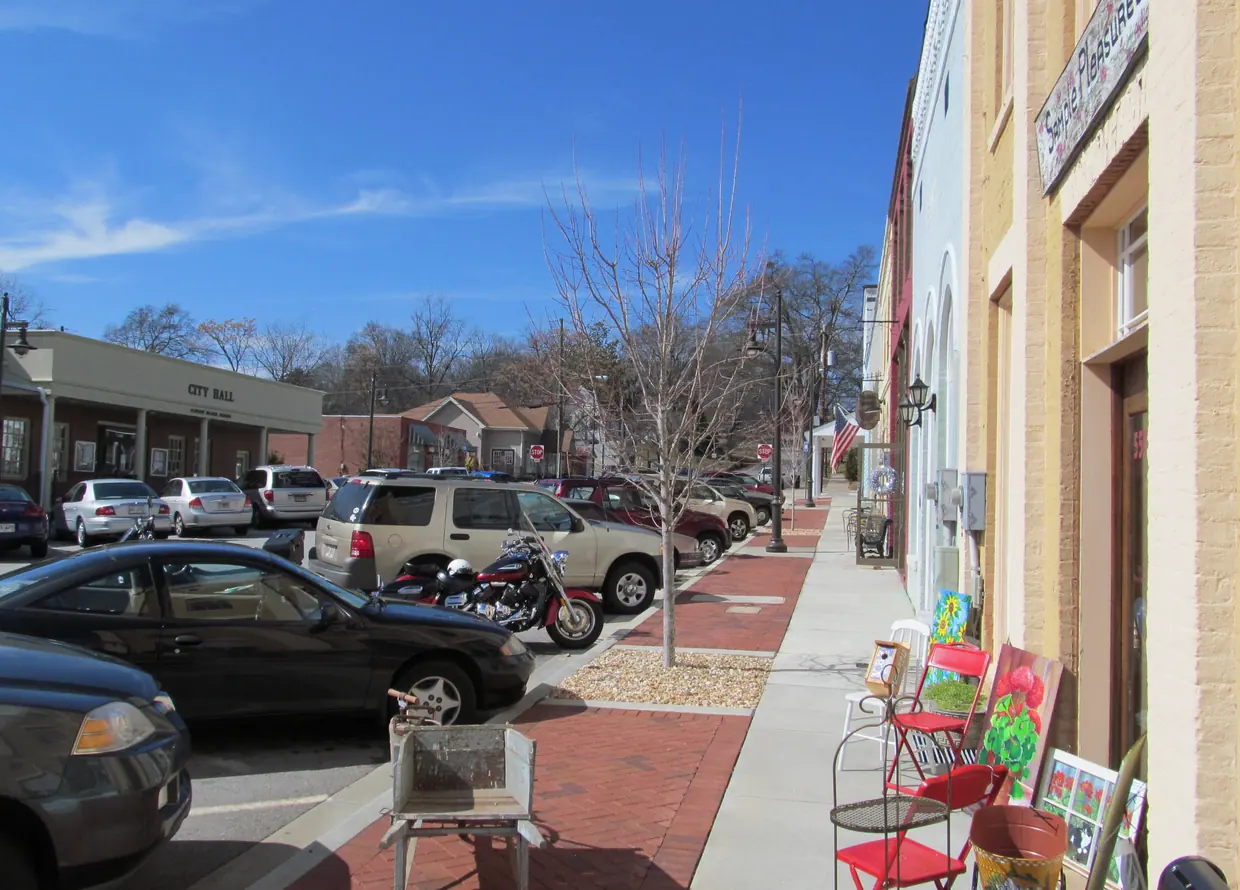
- City of Flowery Branch water and sewer service must be applied for in person at City Hall, 5410 Pine Street. City of Flowery Branch, checked 2026-10-19
- The City runs its own wastewater treatment at a Water Quality Reclamation Facility, and its Public Utilities office is at 5572 Atlanta Hwy. The City uses conservation pricing for water. City of Flowery Branch, checked 2026-10-19
Ask Utility Billing two direct questions: is this address in the City’s water and sewer service area, and is there an active sewer account at the property? If the City says the water comes from Gainesville, ask who handles the sewer, then confirm with that provider.
Hall County treats wastewater in south Hall as well, at the Spout Springs Water Reclamation Facility.
Hall County broke ground on the Spout Springs Water Reclamation Facility expansion, which will raise wastewater capacity from 750,000 to 1.6 million gallons per day so the County can keep serving surrounding residents and businesses for the next 10 to 15 years. (Hall County, checked 2026-10-19)
That expansion shows the County is planning for growth along the corridor. It is not a promise that a particular street is connected or will be, and the County’s announcement does not list the subdivisions the plant serves. Ask Hall County about the specific address.
Hall County GIS built a public interactive web map showing parcels, streets, districts, facilities, parks, zoning boundaries and utilities. The City's website links a Hall County GIS map. (Hall County, checked 2026-10-19)
The GIS map is a good place to look at utility lines and districts around a parcel before you call. Treat what you see there as a pointer. The utility’s own answer is the one to rely on.
Step 3: request the septic record
If the home is on septic, or the seller is not sure, the county health office’s file is the next stop.
Hall County Environmental Health takes individual septic-system record requests by email with the property address and says they can take up to 3 business days. Owners in unincorporated Hall whose property is on septic must contact Environmental Health before applying for a county building permit. (Hall County, checked 2026-10-19)
Send the full street address and, if you have it, the parcel number from qPublic. Read whatever comes back against what you see on site and what the seller told you. If nothing comes back, that is an answer too: ask your home inspector what a septic evaluation would cover, and ask your agent what to request from the seller.
The second half of that fact matters if you are buying in unincorporated Hall and plan to add on later. The Environmental Health conversation comes before the county building permit, so a septic lot can shape your plans for a bedroom, a garage or an addition.
Near the lake: the 1,085-foot rule
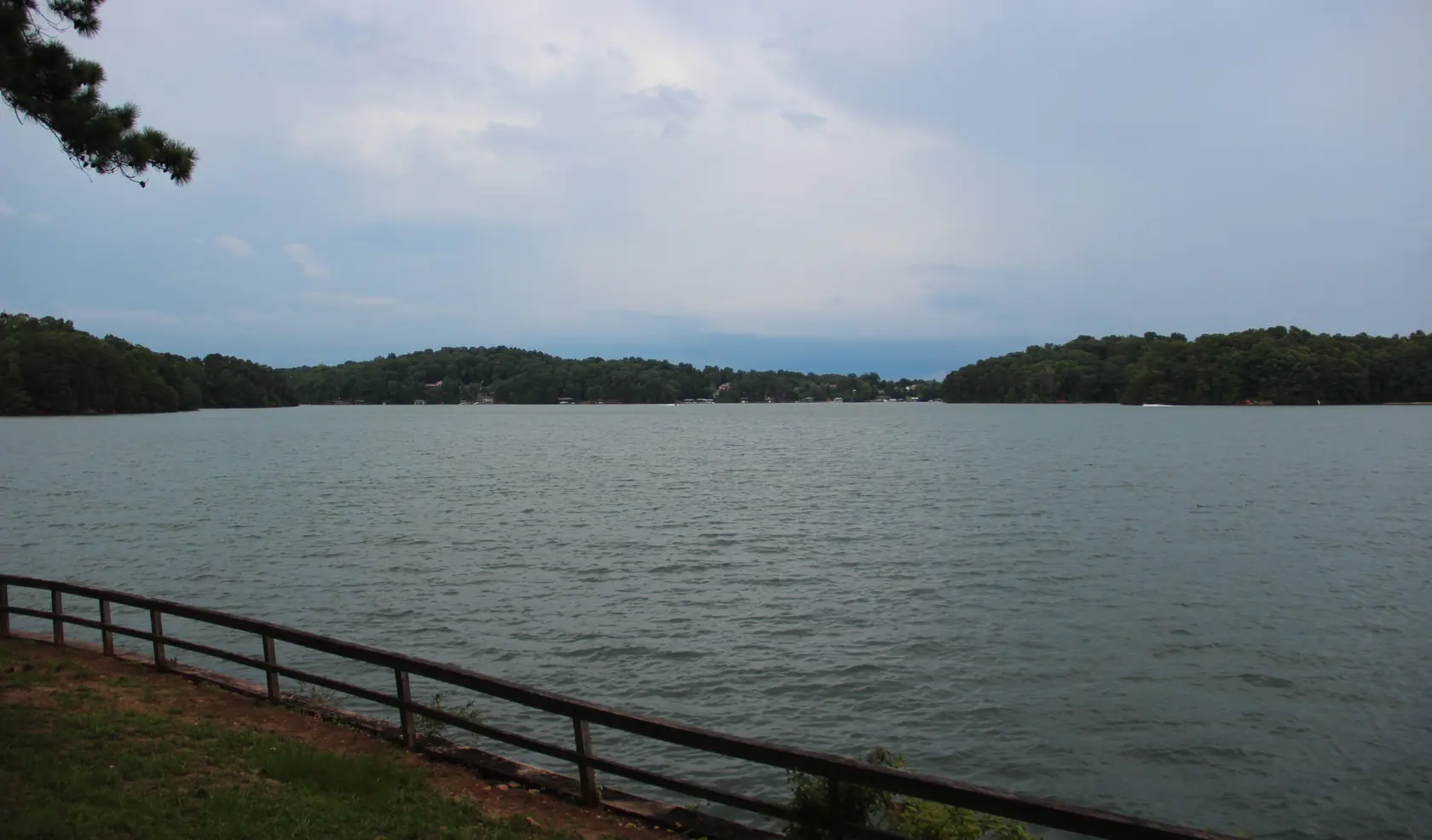
On lots that run down toward Lake Lanier, a contour line limits where a septic system can go.
The plan says health officials around Lanier prohibit new septic systems below the 1,085-foot contour regardless of who owns the land. Septic systems are not permitted on public land below 1,085 feet. (U.S. Army Corps of Engineers (archived page), checked 2026-10-19)
That rule is about new systems. If the house already has one, find out where the tank and field sit relative to the contour, and ask Environmental Health how the rule would treat a future replacement. A survey that shows the contour and the septic location together answers the first question. Our explainer on the 1,085-foot line covers the rest of what that contour controls.
Why it matters before you offer
Sewer or septic changes your monthly bills, your maintenance, what your inspector should look at and, on some lots, what you can build later. It is also hard to change after closing. That is why it belongs in the due-diligence period, with written answers from the seller and the utility, rather than in a note after the inspection.
Ask your agent to put the seller’s answer about sewer or septic in writing as part of the offer package, and plan your due-diligence days so the utility and the health office have time to reply. A short list of the steps, in order:
- Get the seller’s water and sewer bills.
- Confirm the address with City Utility Billing, or with Hall County if the City says it is not theirs.
- Request the septic record from Hall County Environmental Health if there is any doubt.
- On a lake lot, ask your surveyor to show the 1,085-foot contour and the septic location on the same drawing.
- Check whether the parcel is inside the city, because that also decides which tax bills arrive: see city limits vs unincorporated Hall County.
Questions buyers ask
Can I put in a new septic system near Lake Lanier?
Not below the 1,085-foot contour. The Corps plan says health officials around Lanier prohibit new septic systems below that line regardless of who owns the land.
Is my Flowery Branch home on City water and sewer?
Not necessarily. The City says some residents get water from the City of Gainesville and asks people to call to check whether a property is in its service area. City service is applied for in person at City Hall.
Source: City of Flowery Branch
How do I get septic records for a home in Hall County?
Email Hall County Environmental Health with the property address. It says record requests can take up to three business days.
Source: Hall County
Is public sewer expanding along Spout Springs Road?
Hall County broke ground on an expansion of its Spout Springs Water Reclamation Facility, raising capacity from 750,000 to 1.6 million gallons per day. Whether a given home is connected is still an address-by-address question.
Source: Hall County
Next step: our sewer or septic guide collects the contacts in one place, and the due-diligence checker turns these steps into a printable list. When you have a short list of homes, browse Flowery Branch homes for sale on Gold Peach Realty and ask for the bills on each one.
Written by the Flowery Branch Homes Editorial Team. AI tools help us draft; people check every fact before it publishes.
Rules, rates and maps change. Every rule on this page links to the office that sets it; confirm with that office before you rely on it.